


If the room spins when you roll over in bed, look up or stand up quickly, you’re not imagining it, and it’s not automatically “just getting older.” Do objects seem to move when you’re sitting still? Vertigo and dizziness often have a specific cause that can be treated.
Many causes of dizziness respond well to vestibular physical therapy: targeted assessment and treatment for the inner ear and balance system. At JNP Physical Therapy, that means a careful evaluation, hands-on techniques when appropriate and a plan matched to your findings, in Palm Beach Gardens and throughout Palm Beach County.
How people describe vertigo and dizziness
Dizziness shows up in different ways. Any of these deserve a proper look:
- Spinning or tilting (classic vertigo)
- Feeling off-balance or like you might fall
- Motion sensitivity in the car or grocery aisles
- Fogginess after looking up, rolling in bed or turning quickly
- Avoiding activities because you’re afraid of getting dizzy again
Fear of falling is a problem in itself. When people stop moving, strength and confidence drop, and real fall risk goes up.
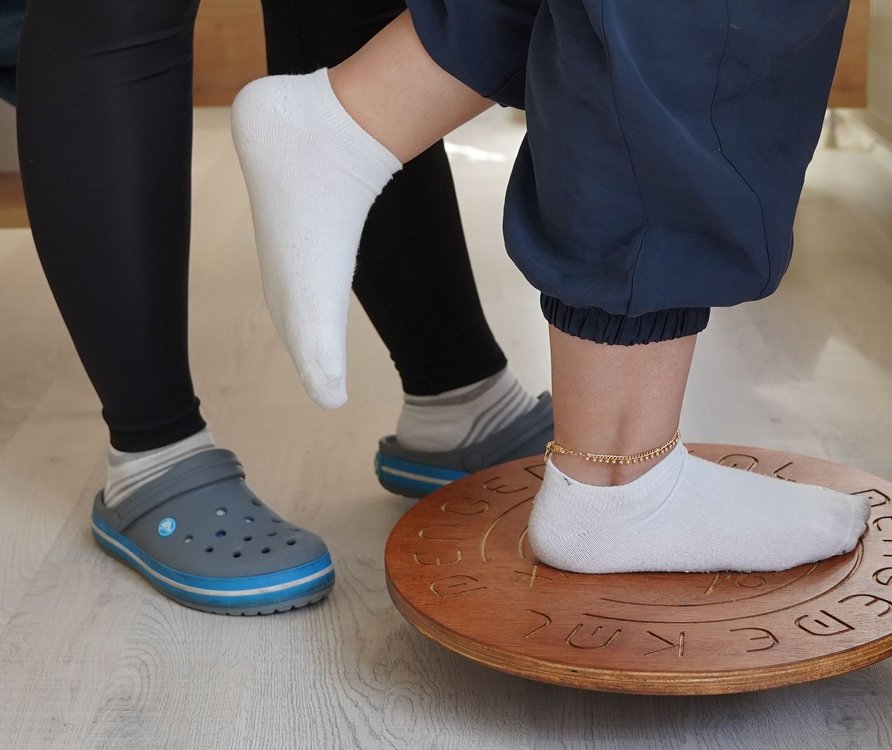
Why “just aging” is the wrong default
Balance does change with age. That does not mean every episode of spinning should be ignored. Treatable contributors can include:
- BPPV (benign paroxysmal positional vertigo): tiny inner-ear crystals that have shifted out of place; episodes are usually brief and triggered by position
- Reduced inner-ear function after an infection, vestibular neuritis or other injury
- Neck-related (cervicogenic) dizziness, once other causes are ruled out
- Balance changes after surgery
- Deconditioning after illness or reduced activity
- Mismatches between vision, sensation in the feet and inner-ear signals
Seek medical care right away for sudden or severe symptoms. Physical therapy works alongside medical care, not instead of it.
What a vestibular physical therapy evaluation includes
Depending on your symptoms, we may:
- Take a detailed history: onset, triggers, duration, hearing changes, medications and falls
- Test positional triggers safely
- Assess gaze stability, walking, turning and standing balance
- Identify which system is driving your symptoms
- Start specific maneuvers or exercises matched to those findings
- Build a home program you can actually stick with between visits
You should leave with a clear explanation of what’s happening and what to do about it. Our process page explains how visits are structured.
BPPV: a common, treatable cause of vertigo
If your vertigo is short, intense and triggered by rolling in bed, looking up or lying down, BPPV is high on the list. Many people live with it for months thinking it’s permanent.
The national clinical practice guideline for BPPV recommends canalith repositioning maneuvers, such as the Epley maneuver, for the most common (posterior canal) form of BPPV. Many people improve within a few visits. The maneuver has to match the inner-ear canal involved, though, and some dizziness isn’t BPPV at all. That’s why a self-guided video maneuver can fail, and why testing comes first.
What vestibular treatment can look like
Plans vary, but often include a mix of:
- Canalith repositioning when BPPV is confirmed
- Gaze-stability and habituation exercises when appropriate (the approach recommended in the physical therapy guideline for reduced inner-ear function)
- Balance and gait training that challenges you safely
- Neck treatment when neck-related factors are part of the picture
- Activity pacing so you rebuild confidence without constant flare-ups
Progress isn’t always a straight line. What matters is a clear target and adjustments based on how you respond. Vestibular (vertigo) treatment and balance issues are among the conditions we treat.
What helps before your first visit
- Write down when dizziness happens and what triggers it
- Note medications and recent illnesses or ear symptoms
- Avoid ladders, roofs and other fall risks until you’re assessed
- Use good night lighting and keep walking paths clear
- Skip online “vertigo fixes” that may not match your type of dizziness
Ready to feel steadier?
Dizziness steals confidence. Skilled vestibular physical therapy can help many people get it back.
Call JNP Physical Therapy at 561-907-8866 or request an appointment.
Sources
- Bhattacharyya N, et al. Clinical Practice Guideline: Benign Paroxysmal Positional Vertigo (Update). Otolaryngology–Head and Neck Surgery, 2017.
- Hall CD, et al. Vestibular Rehabilitation for Peripheral Vestibular Hypofunction: An Updated Clinical Practice Guideline. Journal of Neurologic Physical Therapy, 2022.
- Vestibular Disorders Association: Benign Paroxysmal Positional Vertigo (BPPV)
This article is general information, not medical advice. Seek medical care for new or severe symptoms.